
Does pack mentality really exist in pet dogs?

"My dog thinks he's the alpha."
"She's trying to dominate me."
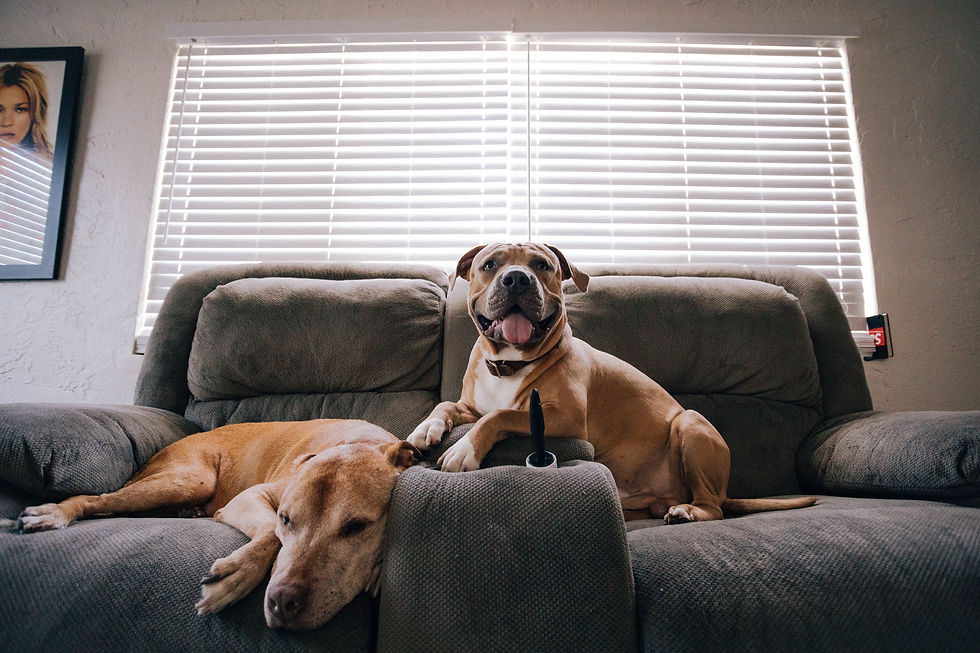
"He sleeps on the sofa, so he thinks he's in charge."
If you've owned a dog for any length of time, you've probably heard at least one of these.
For years, we were told dogs were constantly trying to climb the family hierarchy and become the "pack leader." It led many owners to believe that everyday behaviours were signs of dominance or a battle for control.
But is that really how our pet dogs think?
The short answer is... not really.

Where did the idea come from?
The idea of pack mentality came from studies of captive wolves carried out many years ago. Researchers observed unrelated wolves living together in artificial environments and noticed competition over food, space and resources. From this came the belief that wolves were constantly fighting to become the "alpha."
Later research painted a very different picture.
Wild wolf packs are generally family groups, made up of parents and their offspring. Rather than constantly competing for leadership, they work together to survive. Parents guide, protect and teach their young, much like any other family.
Our pet dogs have evolved even further from their wolf ancestors. While they still have social instincts, they don't spend their days plotting how to take over the household.
Your dog isn't trying to rule the house
One of the biggest misconceptions is that everyday behaviours are attempts to become "top dog."
If your dog jumps on the sofa, pulls on the lead or runs through the front door first, it doesn't automatically mean they're trying to dominate you.
More often than not, they're simply repeating behaviours that have worked for them before.
Dogs learn through experience. If something is rewarding, they'll do it again. That's not leadership, it's learning.

So why do dogs behave differently around each other?
Dogs are social animals and they do form relationships with one another, particularly if they live together.
You might notice that:
One dog always gets to the water bowl first.
Another prefers to carry the favourite toy.
One confidently greets visitors while another hangs back.
One chooses the best sleeping spot without any fuss.
Another happily gives way rather than competing.
These behaviours don't necessarily mean one dog is "the boss." More often, they've simply learned how to live together peacefully. Just like people, every dog has their own personality, confidence level and preferences, and those relationships can change depending on the situation.
Why does this matter?
Because the reason behind a behaviour influences how we respond to it.
If you believe your dog is trying to dominate you, you're more likely to focus on showing them who's in charge.
But if you understand that behaviour is shaped by learning, emotions, previous experiences and the environment, your approach becomes calmer, fairer and much more effective.
Instead of asking, "How do I stop my dog being dominant?", try asking, "Why is my dog behaving this way?"
That simple shift in thinking often leads to much better results.
The Homely Petz view
At Homely Petz, we don't spend our time worrying about who's leading the pack.
We focus on understanding the dog in front of us.
Every behaviour has a reason, whether it's excitement, fear, habit, frustration or simply a lack of understanding. When we identify the reason behind the behaviour, we can build a training plan that makes sense for both the dog and the owner.
Because good training isn't about proving who's boss...
...it's about building trust, clear communication and a relationship your dog wants to be part of.
🐾 Need a Helping Paw?
If you're struggling with your dog's behaviour or simply want to better understand why they do the things they do, we're here to help.
Whether it's pulling on the lead, jumping up, reactivity or confidence building, our experienced trainers will help you understand the why behind the behaviour and show you how to move forward with confidence.
📞 WhatsApp or call 050 8717 072/3


Comments