
When Play Turns Pushy: Understanding Overexcitement in Dogs

The cooler weather is finally here, tails are wagging, leashes are coming out, and dogs all over the UAE are bursting with energy after the long summer. It’s the perfect time for outdoor adventures, park visits, and social play.
But as trainers, we often see one common pattern as the temperatures drop: dogs who start off playing nicely, suddenly get too wound up, barking, nipping, ignoring cues, or even snapping when the game goes too far. What started as fun quickly turns into frustration.
That shift from playful to pushy is what we call overexcitement, and understanding it is key to helping your dog play safely, calmly, and happily, with both humans and other dogs.
Excited vs. Overexcited — Knowing the Difference
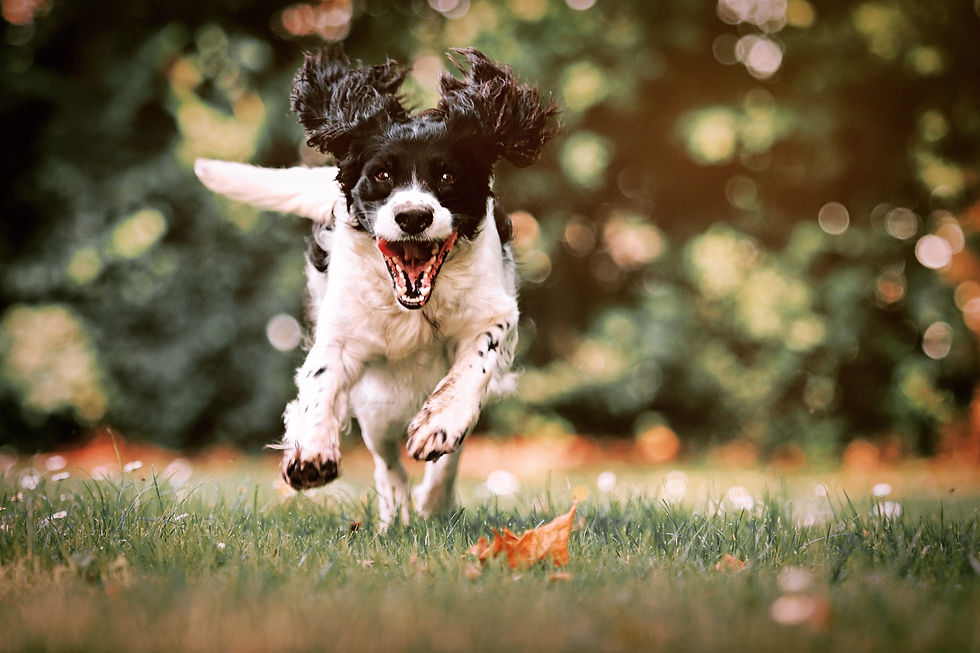
Excitement is healthy, it’s how dogs express joy, anticipation, and connection. A wagging tail, bright eyes, and a playful bounce are all great signs.
Overexcitement, however, is when that energy tips into chaos. The tail becomes stiff, the barking becomes sharp, and your dog starts ignoring familiar cues. They may jump excessively, mouth at your hands or clothes, or become fixated on toys or other dogs.
It’s not “bad behaviour.” It’s simply a dog who’s lost emotional control. Just like people, dogs can become overstimulated, they just need help finding their calm again.

Why Overexcitement Happens
There are several reasons dogs become overly wound up, especially during play:
Energy build-up: A dog who hasn’t had enough mental or physical exercise before play may explode with pent-up energy.
Mixed signals: When owners laugh or engage during rough play, dogs think it’s encouraged, not redirected.
Frustration: Dogs can become overstimulated if they can’t reach a toy, another dog, or aren’t sure what’s expected of them.
Environment: Dog parks, group settings, or even festive gatherings can overload their senses.
Understanding why your dog tips over the edge helps you prevent it next time.
How to Step In Without Killing the Fun
The goal isn’t to stop play, it’s to guide it. Structure during play helps your dog stay mentally engaged while learning to regulate their excitement.
Here’s how to do it:
✅ Add pauses. Use cues like “enough” or “settle.” Wait until your dog relaxes, reward calm behaviour immediately.
✅ Reward balance. Praise when your dog stays gentle, takes turns, or drops a toy when asked.
✅ Short, fun bursts. Keep play sessions brief and positive. Quit while they’re still focused, not frazzled.
✅ Stay calm yourself. If you match your dog’s energy, they’ll escalate further. Calm is contagious.
Think of it as teaching your dog self-control through fun.
Set Them Up for Success
If your dog tends to go from zero to zoomies in seconds, preparation helps.
Start with calm energy. Take a short walk or sniff session before play to burn off excess excitement.
Mix in obedience cues. Ask for a “sit,” “stay,” or “down” mid-game. It builds listening skills even in high energy moments.
Rotate toys. New textures and shapes keep interest high but frustration low.
Encourage breaks. A brief pause or drink of water resets focus and keeps play positive.
Over time, your dog learns that being calm brings more play, not less.
Calm Play Builds Confident Dogs
Dogs who can switch between excitement and relaxation develop strong emotional balance. They’re easier to train, better around guests, and more socially confident.
Play is an outlet for expression, but it’s also an opportunity for learning. Teaching your dog how to control their energy during play strengthens the bond between you and them, creating trust and teamwork that carries into every other part of life.
At Homely Petz, we believe in turning chaos into calm through structured, reward-based methods. Using marker training, we help dogs understand exactly when they’ve made the right choice, that moment of calm becomes the key to confidence.
Finding the Balance — Fun Without Frustration
So next time your dog’s play session starts getting a little too wild, don’t see it as misbehaviour. It’s a signal that they need a pause, a breath, and a bit of redirection.
With patience, consistency, and the right communication, your dog can learn that calm and play go hand-in-paw. Because the best kind of fun is the kind that ends with relaxed, happy tails.
How We Can Help
If your dog struggles to switch off or gets overstimulated during play, our trainers can help guide that energy into balance.
Whether through Stay & Train, daycare enrichment, or one-to-one training, we use proven communication techniques to build focus, confidence, and calm, while keeping the fun alive.
📞 Contact Homely Petz today to book a session and bring balance back to playtime.


Comments