
"My Dog Would Never Bite”… Until They Do
- The Dogzbody

- Apr 20
- 3 min read
The most common sentence we hear…
“My dog would never bite.”
And most of the time… owners genuinely believe that.
Because their dog is:
Friendly at home
Good with familiar people
Never “shown aggression before”
But here’s the truth
Bites don’t come out of nowhere.
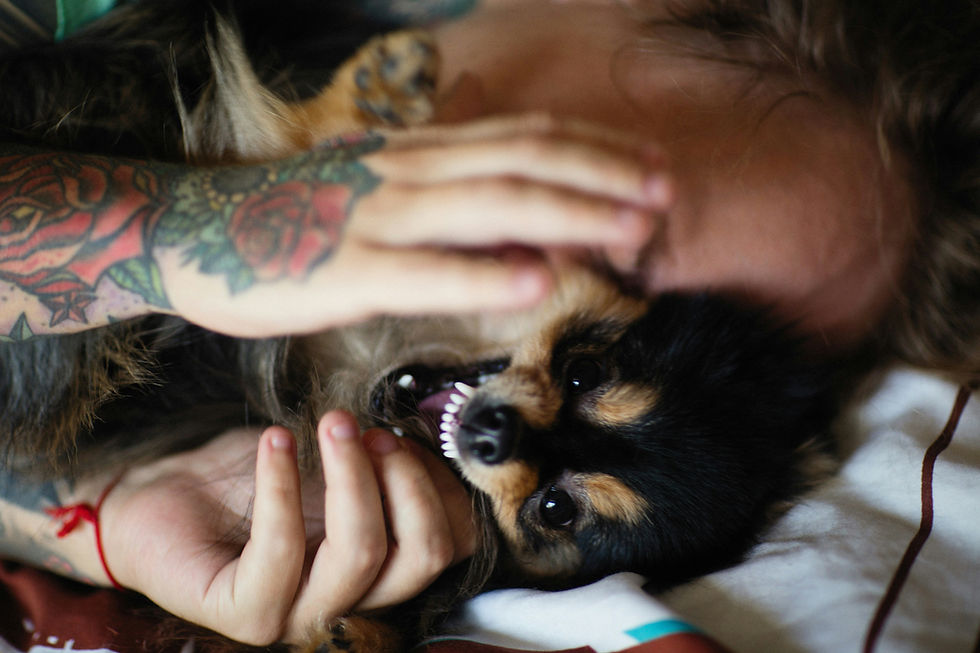
They happen when communication is missed.
Most dogs don’t just suddenly bite, they usually give plenty of warning signs first, but they’re easy to miss if you don’t know what to look for. Things like turning their head away, licking their lips, yawning, going still, or avoiding eye contact are all ways a dog is saying they’re uncomfortable. If those signals are ignored, the dog may escalate to growling or showing teeth, and if they still feel trapped or pressured, a bite can happen. It’s not about a “bad” dog, it’s usually a dog that feels stressed, overwhelmed, or unsure, and doesn’t feel it has another option.
Most of the early warning signs dogs give are very subtle, which is why they’re so often missed. Things like turning their head away, licking their lips when there’s no food, yawning when they’re not tired, going very still, or avoiding eye contact are all ways a dog is saying they’re uncomfortable. When those signals are ignored and the pressure continues, the dog has no choice but to escalate, their body becomes stiff, their stare hardens, they may start growling or even show their teeth. This is where people often get it wrong, especially by telling a dog off for growling. Growling isn’t bad behaviour, it’s communication, the dog is warning, trying to create space, and asking for the situation to stop.
If you punish that…
You don’t remove the emotion.
You remove the warning.
And that’s when people say:
“He bit out of nowhere.”
Children and dogs, where risk increases
Many bites happen in everyday situations:
Hugging dogs
Taking toys or food
Climbing on them
Interrupting rest or sleep
To a dog, this can feel overwhelming or threatening.
Especially if they’ve already asked for space… and it wasn’t respected.

Prevention Is Always Easier Than Fixing
At Homely Petz, we focus on "early understanding", not just correction.
Here’s what makes the difference:
✔ Learning your dog’s signals
✔ Managing environments properly
✔ Not putting dogs in situations they can’t cope with
✔ Building calm, structured communication
✔ Getting guidance early, not after an incident
Aggressive dog” or misunderstood dog?
Most of the dogs we see aren’t “aggressive” or bad, they’ve just been misunderstood. Quite often, they’ve been misread, meaning their early warning signs were missed or ignored. They may have been overexposed to situations they weren’t ready for, like busy environments, unfamiliar dogs, or too much handling. In many cases, they’ve simply not been given clear, consistent guidance on how to behave or how to cope, so they’re left to figure things out on their own.
When that happens, behaviour we label as “aggression” is often just a dog trying to manage stress, confusion, or pressure the only way it knows how. It’s not about dominance or stubbornness, it’s about communication and coping.
The good news is, when you start to understand what your dog is feeling and why they’re reacting the way they are, everything begins to shift. With the right guidance, structure, and support, those same dogs can become calmer, more confident, and far easier to live with. And that’s when you realise… it was never about having a “bad” dog in the first place.
Final thought
Your dog is always communicating.
The question is…
are we listening early enough?
Need help understanding your dog?
If you’re seeing behaviours you’re unsure about, don’t wait for them to escalate.
At Homely Petz, we work with dogs and owners to:
* Build clarity
* Reduce stress
* Improve communication
📩 Get in touch, we’ll help you understand what’s really going on.


Comments